Choose a slot whose rules and costs you can explain
Choose a slot by the feature you want to follow, the amount each paid action costs, and the rules of the exact edition and mode. Sticky wilds, a fish-collection ladder and a switch between Olympus and Hades give you different things to watch. Compare their return information after identifying the game; a familiar name or an impressive maximum win leaves too much of that choice unexplained.

Start with the feature you want to follow
The useful first filter is a preference you can describe: watching wilds stay on the reels, collecting values through a feature, or choosing between two feature patterns. A theme can attract your attention, but the rules decide what happens after the symbols land.
- Choose the mechanicSticky wilds, fish collection or a named mode.
- Read the paid amountTotal stake, added-stake option or purchase price.
- Match edition and modeKeep the rules and return row with that exact choice.
The Dog House: wilds that stay for the feature
The original The Dog House uses 20 fixed paylines. Its wilds on reels 2, 3 and 4 can have 2x or 3x multipliers. When several multiplier wilds form part of the same winning line, their multipliers add together. During free spins, the wilds stay in their positions until the bonus ends.
That gives you a feature to follow through the positions already occupied by wilds. The original rules allocate 9 to 27 free spins using nine small reels, each showing 1, 2 or 3, and the feature cannot retrigger. You are watching the remaining allocated spins with their sticky positions, rather than working towards an extra-spin collection trail.
Choose this example to understand fixed lines and additive sticky wilds. Keep the edition name intact: The Dog House Megaways and The Dog House Multihold have their own rules. The original game's 20-line description cannot explain either of those editions.
Keeping It Reel: fish, a net and a collection ladder
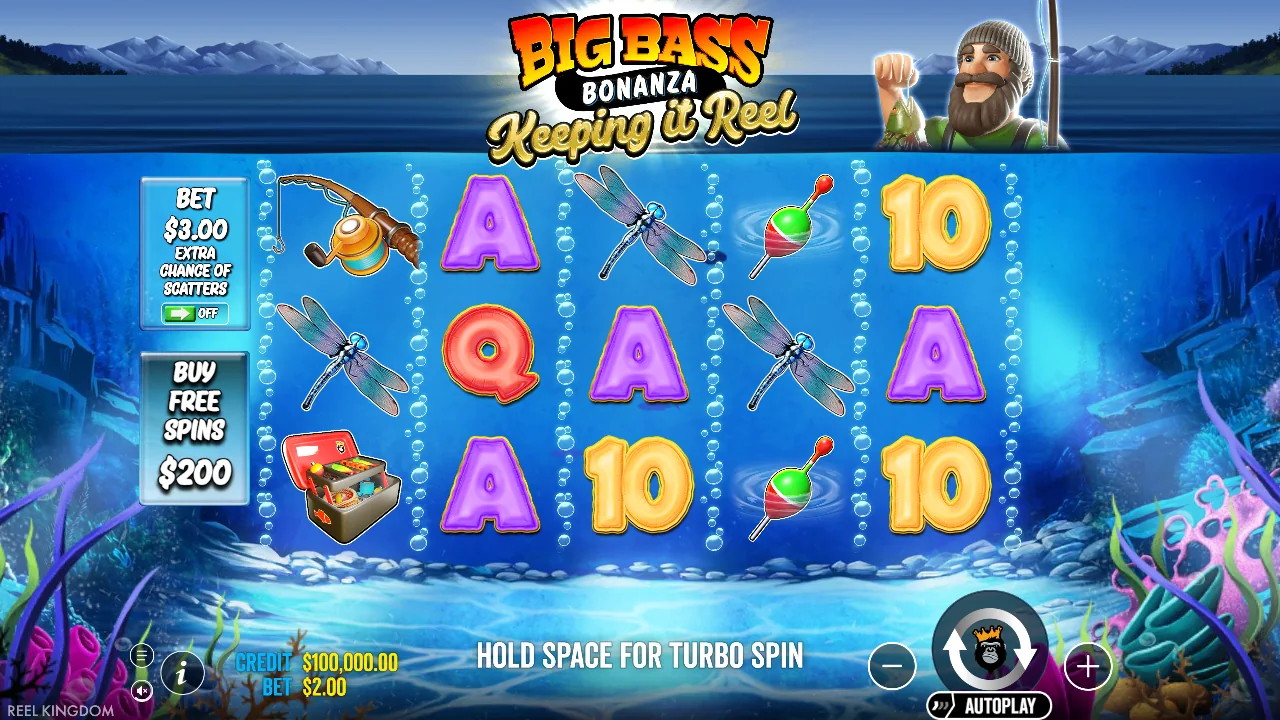
Big Bass - Keeping it Reel puts the collection mechanic at the centre of its free spins. Ordinary Wilds collect the Fish Money values visible on the screen. Golden Wilds collect those values and the current landing-net value. Fish that were not collected go into the net, where a random fish with a random value escapes on each free spin and its value is subtracted.
The net is therefore a value to watch as the feature develops, not an amount already paid into your balance. A Golden Wild's extra collection and an ordinary Wild's visible-fish collection are different events. The detailed native rule describes random fish escaping; there is no fixed percentage deduction to budget around.
There is also a Wild collection trail. Every fourth collected Wild awards 10 more free spins, with the later batches using 2x, 3x and 10x collection multipliers at levels 2, 3 and 4. The new spins run after the current batch finishes. After level 4, the trail cannot retrigger again. Those level multipliers apply to collected fish and net money; regular line wins keep their own calculation.
Choose this example if you want to understand a feature with stored values and a visible progression condition. An incomplete trail supplies no promise that the next Wild will arrive before the remaining spins finish.
Zeus vs Hades: choose between two named modes
Zeus vs Hades - Gods of War has Olympus and Hades modes, with switching described in the base game. Pragmatic Play calls Olympus High volatility and Hades Very High. The native CV rules explain the relative feature pattern more usefully than either label alone:
Mode
Olympus
- Free-spin entry compared with the other mode
- More frequent
- Average free-spin round award compared with the other mode
- Lower
Mode
Hades
- Free-spin entry compared with the other mode
- Less frequent
- Average free-spin round award compared with the other mode
- Higher
These are the supplier's relative descriptions. They provide no numerical trigger frequency or average award, and they do not establish a profit advantage for either mode. Both modes have a 15,000x bet maximum, so that shared cap does not resolve the choice between their different feature patterns.
If feature entry is what interests you, the Olympus description answers that preference directly. If the appeal is Hades' different pattern, read its rules as Hades. A mode switch changes the named play profile; it is not a method for recovering money spent in the other mode.
Put a cash amount beside every paid choice
Read the total paid stake, including an optional increased-stake mode, before deciding whether a slot fits the amount you intend to spend. A coin value, a line multiplier and the total stake can describe different parts of the calculation. The number that matters to this decision is the money committed by the action you are about to confirm.
A stake menu is not a spending recommendation
The original Dog House EUR rulebook, version cv29-1.0.50625, gives a EUR 0.20 minimum total stake and EUR 100 maximum. Those are the endpoints in that particular rulebook, not a universal current casino menu. They also make the effect of stake size easy to see.
Take a hypothetical EUR 100 allocation, counting only the starting money and no reused prizes:
Chosen total stake
EUR 0.20
- Calculation
- EUR 100 ÷ EUR 0.20
- Initially fundable stakes
- 500
Chosen total stake
EUR 100
- Calculation
- EUR 100 ÷ EUR 100
- Initially fundable stakes
- 1
This division counts stakes the initial money could fund. It predicts neither a session's duration nor the number of spins before the balance runs out: returned prizes, if there are any, change what can be staked again. The maximum in a menu gives you no reason to use it.
For your own comparison, write down the total stake you would choose and the amount you are prepared to spend. If the minimum offered in the game already exceeds that chosen stake, that game instance does not fit your plan. Moving to a higher stake to make the feature feel worthwhile changes the spending decision too.
A prize can still leave the round at a loss
The original Dog House paytable makes a useful distinction visible. Three Q symbols on one qualifying line pay 0.1x the total stake. Construct a round at EUR 0.20 with exactly that line award, no wild multiplier, no scatter award and no other winning line:
Part of the round
Paid total stake
- Calculation
- Chosen for this example
- Amount
- EUR 0.20
Part of the round
Gross prize
- Calculation
- EUR 0.20 × 0.1
- Amount
- EUR 0.02
Part of the round
Net result
- Calculation
- EUR 0.02 − EUR 0.20
- Amount
- −EUR 0.18
The paytable awards a prize, while the round returns less than it cost. When comparing descriptions such as frequent wins or a hit rate, keep that difference in mind. A count of prize events cannot by itself tell you how often a round finishes ahead of its stake. This constructed hand calculation is not a measurement of the game's hit frequency or RTP.
Keeping It Reel: normal, Ante and a feature purchase
The documented Keeping It Reel native help separates two stake-multiplier options from an optional Buy Free Spins action. Read the cost and the compatibility of those options together.
Choice in this native example
Normal play
- Cost basis
- Bet-multiplier label 10
- What else changes
- The ordinary stake is the starting point for the comparison.
Choice in this native example
Ante Bet
- Cost basis
- Bet-multiplier label 15
- What else changes
- More Scatters are present; Buy Free Spins is disabled in this option.
Choice in this native example
Buy Free Spins
- Cost basis
- 100x the current total bet
- What else changes
- A separate base-game purchase starts the feature. It is not available with the Ante option described here.
At an unchanged underlying denomination, Ante's monetary cost is 15 ÷ 10 = 1.5 times the normal stake, a 50% increase. The label 15 does not mean fifteen times the ordinary total stake.
For a hypothetical EUR example, suppose an offered denomination makes the normal total stake EUR 0.20. Keeping that denomination unchanged would make the Ante total EUR 0.30: EUR 0.20 × 15 ÷ 10 = EUR 0.30, or EUR 0.10 more per paid round. This illustrates the ratio; it does not establish an available EUR menu. The supplier's pictured help uses a dollar symbol without identifying an ISO currency.
The purchase price has a different base: current total bet. Read the displayed total and the actual purchase confirmation together. Do not calculate an Ante purchase from EUR 0.30 in this example, because the documented Ante option disables that purchase. Nor does the higher-stake option disclose a numerical increase in feature chance or a profitable return.
Equal return percentages would not make these actions cost the same. A normal stake, a stake increased by 50% and a purchase priced at 100 times the current total bet commit different amounts.
Match the return figure to the exact game and mode
Theoretical RTP describes a game's designed return percentage. Actual RTP describes the prizes returned across a selected past set of play. Its monetary denominator is all stakes, including prizes that were won and then staked again. A starting deposit is a different amount.
A return percentage does not promise that your balance will keep that proportion of a deposit, or that the next session will reproduce it. For choosing between game instances, the useful starting point is the theoretical-return information attached to the exact edition and optional mode you are considering.
A name search can produce the wrong return row
For original Big Bass Bonanza, Pragmatic Play's catalogue gives 96.71%. A separate, unversioned English native help document gives 90.63%. The figures are 6.08 percentage points apart. Neither a catalogue lookup nor that other document identifies the setting served in the game in front of you.
The same native example prints stakes from £0.10 to £250.00, but the printed symbol alone does not identify the ISO currency or your current stake menu. Keep the return row, the edition and its own amount display together. Transferring a percentage from the title's search result is exactly the shortcut that this example exposes.
See the original Big Bass rules and return distinction.
Keeping It Reel: a variant list and mode rows answer different questions
The Keeping It Reel supplier Overview lists 96.07%, 95.07% and 94.07% return variants. That tells you there are differently labelled configurations to distinguish. It does not tell you which one a casino serves.
Within the pictured 96.07% configuration, the native help prints these separate rows:
Mode
Normal
- Theoretical RTP in this pictured configuration
- 96.07%
Mode
Ante Bet
- Theoretical RTP in this pictured configuration
- 96.07%
Mode
Buy Free Spins
- Theoretical RTP in this pictured configuration
- 96.07%
The equal rows belong to that configuration. They do not supply Ante or purchase values for the 95.07% and 94.07% variants. They also leave the different monetary costs intact: the Ante option still uses the increased stake and disables Buy Free Spins.
Sugar Rush 1000: keep both the suffix and purchase name
Sugar Rush 1000 is a separate edition from original Sugar Rush. Its supplier catalogue shows 96.00%, while the native document titled Sugar Rush 1000 CV has the following mode-specific values:
Mode in the CV document
Normal
- Theoretical RTP
- 95.50%
- Difference from normal within this document
- Reference row
Mode in the CV document
Buy Free Spins
- Theoretical RTP
- 95.51%
- Difference from normal within this document
- 0.01 percentage points higher
Mode in the CV document
Buy Super Free Spins
- Theoretical RTP
- 95.43%
- Difference from normal within this document
- 0.07 percentage points lower
The small differences describe the theoretical ratios for these exact modes. They do not turn a purchase into a profitable action, and the catalogue's 96.00% cannot replace the CV document's individual rows. Buy Free Spins and Buy Super Free Spins are separate options, so keeping only the word buy in your notes loses an essential part of the comparison.
This CV document prints R3.00 to R3,600.00 for its stake range without an ISO currency code. Those printed amounts do not establish the available EUR or PLN stakes in another game instance. Neither CV nor a PDF's date is a substitute for a displayed numeric game build.
Read volatility as a scoped description
Volatility concerns the spread of returns, while RTP concerns the designed mean or a past aggregate return ratio. A volatility label can help describe the kind of payout pattern the supplier intends. It does not provide the full distribution, a numeric hit rate or your probability of finishing a session ahead.
The same percentage can sit beside different labels
The original Dog House catalogue has 96.51% RTP, alongside a separate original-game intro observation labelled Medium volatility. Sweet Bonanza Super Scatter's native help has 96.51% for normal play and calls that edition Low volatility. The identical percentages answer a return question; they do not make the two labels identical or explain the two games' mechanics.
Keep the source of each figure in its description: the Dog House percentage is a catalogue value, while the Sweet Bonanza Super Scatter figure is that native normal-play row. This comparison does not establish the settings in any casino or a common numerical scale for the labels.
A maximum win supplies an upper limit
Sweet Bonanza Super Scatter's same native rules combine the Low label with a 50,000x bet cap. At the cap, the round ends and remaining features are forfeited. The existence of that large upper boundary does not tell you the chance of reaching it, and changing Low to High because the maximum looks large would overwrite the supplier's description.
Zeus vs Hades makes the other half of the point: Olympus and Hades share a 15,000x cap while their relative feature-entry and average feature-award patterns differ. Choose between the modes using their actual rules and that qualitative comparison. The shared maximum cannot choose for you.
Keep the supplier's scale as printed
Keeping It Reel's native help says High and shows five yellow lightning icons. Its Overview separately prints Volatility: 10, without a denominator or a conversion into statistical units. Reading that as 10/10, 100% volatility or a standard deviation of 10 adds information the number does not contain.
Use those labels to support a description of the exact edition. If you need the statistical meaning of spread, or the distinction between a hit and a profitable round, that is a separate question from which feature you would enjoy following.
Use the information controls to finish the comparison
The original Big Bass, Keeping It Reel and Sugar Rush 1000 CV help examples document an i Information control and arrows for moving through information pages. Their hamburger menu opens Settings. In the documented implementations, a cash/coin toggle changes the presentation of amounts; it is not an RTP selector.
- Read the full title and provider. Keep suffixes such as 1000 or Keeping it Reel. A familiar series name is not enough to choose another edition's paytable.
- Open Information and follow its page arrows. Find the game rules, paytable, theoretical-return text and optional-mode explanations. In the named examples, the i control leads to these information pages; the separate Settings menu is not evidence that you can choose a return setting.
- Record the total paid amount in cash terms. If the display uses coins, establish what the displayed total means before confirming an action. The coin value alone is not a substitute for the full stake.
- Keep each mode with its own return and cost. Write Ante, Buy Free Spins or Buy Super Free Spins in full. Check whether choosing one mode disables another, as in the Keeping It Reel example.
- Retain the displayed version with your notes, where one is shown. If the return row is absent or unclear, use the game's support route to ask for the theoretical RTP of that exact title, version and mode. A short sequence of results cannot identify the missing theoretical setting.
The fuller RTP lookup procedure includes the named native examples and what to put in that question. A third-party title lookup cannot automatically discover the configuration in your own game window.
If a same-edition virtual-credit version is available to you, it can be useful for locating these controls and following the feature sequence before committing money. Check that the full title and mode match. Treat its amounts and return information as belonging to that version; a preview does not establish an identical paid configuration, and its results do not measure how your money would perform.
Choose the game you can describe before paying
A useful choice leaves you able to explain both the feature and the payment. For a collection game such as Keeping It Reel, that means knowing what the Golden Wild collects, how the Wild trail advances, which total stake is selected, and whether Ante is on. For original The Dog House, it means recognising fixed paylines, additive wilds and a feature with an allocated spin count.
Keep the spending decision separate from the feature
Choose an affordable total stake, an amount you are prepared to spend and a time to stop before funding play. Include optional purchases in that amount if you intend to use them. A net value waiting to be collected, an unfinished trail or a screen showing a large maximum does not add money to that plan.
These are personal limits for your own decision, rather than a claim that a particular casino provides a named account tool. Changing the mode, adding money or raising the stake creates a new decision; a volatility label supplies no guarantee that it will make an earlier loss back.
Carry a precise question into the game review
Use the exact edition review for the detail that decides between your remaining choices: how sticky multipliers combine, what the collection ladder awards, or how the Olympus and Hades feature patterns differ. You can then compare the actual offered stake and mode with the rules you have read.
Questions and answers
How much extra does Keeping It Reel's Ante Bet cost?
At an unchanged underlying denomination, the documented Ante option costs 1.5 times the normal stake, a 50% increase. It has more Scatters and disables Buy Free Spins. A separate Buy Free Spins purchase costs 100x the current total bet and cannot be used with that Ante option.
Does every prize mean the spin made a profit?
No. In a hypothetical original The Dog House round at EUR 0.20, one qualifying three-Q line pays 0.1x total stake, or EUR 0.02, leaving a EUR 0.18 loss. This assumes no Wild multiplier, Scatter award or other winning line; it is an arithmetic example, not a measured hit rate or RTP.
What changes when I choose Olympus or Hades in Zeus vs Hades?
In Zeus vs Hades - Gods of War, Olympus is labelled High volatility and enters free spins more often with a lower average feature award than Hades. Hades is labelled Very High and has the reverse pattern. The comparison supplies no numerical trigger frequency, average award or profit advantage for either mode.