Slot volatility explained: read labels and payout patterns
Slot volatility describes how widely payouts vary. Low, medium and high are useful descriptions of a game's payout pattern, but the label needs to be read beside the exact rules, mode and stake. It helps you understand the kind of experience on offer; it cannot tell you what your next spin will pay.

The distinction becomes clearer with a small award. In the original The Dog House, a qualifying three-Q line pays 0.1x the total stake. On a hypothetical €0.20 spin with that line alone, the award is €0.02. A prize appeared, yet the round lost €0.18. Counting prizes, measuring their size and measuring their variability are different jobs.
Volatility, hit frequency and prize size answer different questions
- VolatilityHow widely do payouts vary?
- Hit frequencyHow often does a defined event occur?
- Prize sizeWhat does this qualifying result pay?
Volatility: how far payouts spread
Volatility concerns the spread of payouts around their average, including outcomes far from that average. Two descriptions of a game can therefore tell you different things: its average return and the way awards are spread across possible results. The size of the largest prize is only one part of that picture.
A supplier's High label is a qualitative description. Keeping It Reel's help describes less frequent payments on average with greater emphasis on large wins. Sweet Bonanza Super Scatter's Low description refers to more frequent, smaller payments while allowing a large win. Neither description gives an exact percentage for your next spin.
Hit frequency: which event is counted
Hit frequency concerns how often a defined event occurs. The definition matters: a line award, a round with any award and a feature entry are different events. A percentage can be interpreted properly only with the event and the game's configuration attached.
For example, the legacy Rainbow Riches mobile sheet prints “Hit Frequency 20 lines: 27.02%”. That is a named model field with 20 active lines. Its summary does not expand what qualifies as a hit, so the figure cannot be treated as the chance of making a profit.
Prize size: what the combination pays
The paytable tells you the award for a qualifying result and the stake basis used to calculate it. A multiplier of total stake and a multiplier of line stake can produce different monetary amounts. Add together all applicable awards before comparing the round's gross return with what the paid round cost.
For a round to produce a net profit, its total award must exceed its paid stake. A positive prize can still leave a loss. That distinction is useful whether the game carries a Low or High label.
A paid combination can leave you below your stake
The original The Dog House rules, version cv29-1.0.50625, use total-stake multipliers in the ordinary paytable. The three-Q award is 0.1x. This is an arithmetic example of one permitted combination, with no wild multiplier, scatter award or second winning line.
- Total stake
- €0.20
- Three-Q line award
- €0.20 × 0.1 = €0.02
- Total gross prize
- €0.02
- Net round result
- €0.02 - €0.20 = -€0.18
The €0.02 award is 10% of this example's €0.20 stake. That single-round ratio is not the game's theoretical RTP or a probability of winning. The example establishes an amount, not how often the combination occurs.
If you use “winning spin” to mean every round with a prize, this example counts. If you mean a round that increases your balance after its stake, it does not. Define the event before interpreting a hit-rate claim.
RTP describes the mean; a maximum win describes the ceiling
RTP needs stakes and gross prizes
Theoretical RTP is the designed return percentage of a game. Actual RTP describes a selected past period: divide all awarded prizes by all stakes and express the result as a percentage. Stakes include money played again after an earlier prize; they are not limited to the original deposit.
Actual RTP = total gross prizes ÷ total stakes × 100. This calculation says how much was returned in aggregate. It does not say how frequently prizes occurred or how evenly they were distributed. A theoretical return is also not a promise that your own session will finish near that percentage.
The original The Dog House catalogue lists 96.51% beside its Medium intro label. Sweet Bonanza Super Scatter's native normal-play help also prints 96.51%, beside Low. These are their respective catalogue and help figures, not proof of identical settings at a casino. The matching percentage does not make their payout patterns identical.
Sweet Bonanza Super Scatter separates its modes: normal play is 96.51%, Ante is 96.53%, and Buy Free Spins and Buy Super Free Spins each show 96.51% in that help configuration. Read the row for the chosen mode; a return percentage is not a volatility score.
A large ceiling does not define High volatility
Sweet Bonanza Super Scatter's same help pairs Low with a round cap of 50,000x bet. At the cap the round ends and remaining features are forfeited. The cap defines the upper award boundary; it does not give the chance of reaching it or justify replacing Low with High.
Zeus vs Hades - Gods of War gives another useful comparison. Its CV help caps both modes at 15,000x bet, while describing a different relative pattern of free-spin entries and feature awards for Olympus and Hades. A shared ceiling can coexist with different payout patterns.
To calculate spread, you need information about the outcomes and their distances from the mean. An RTP figure plus a cap leaves those inputs missing. Neither a maximum-win banner nor a return percentage supplies a numerical variance, bonus probability or cap-hit probability.
Read the supplier's label before comparing games
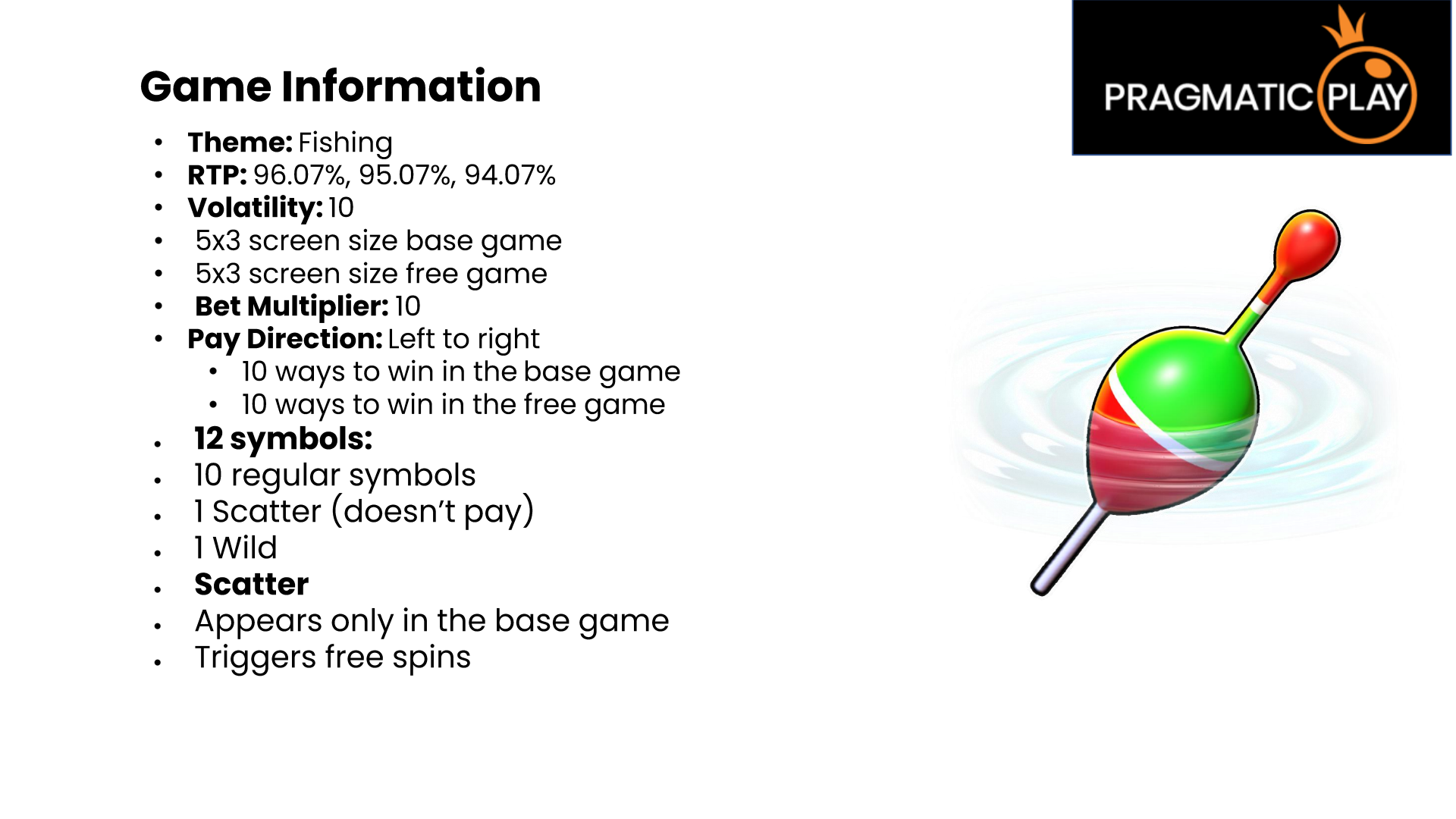
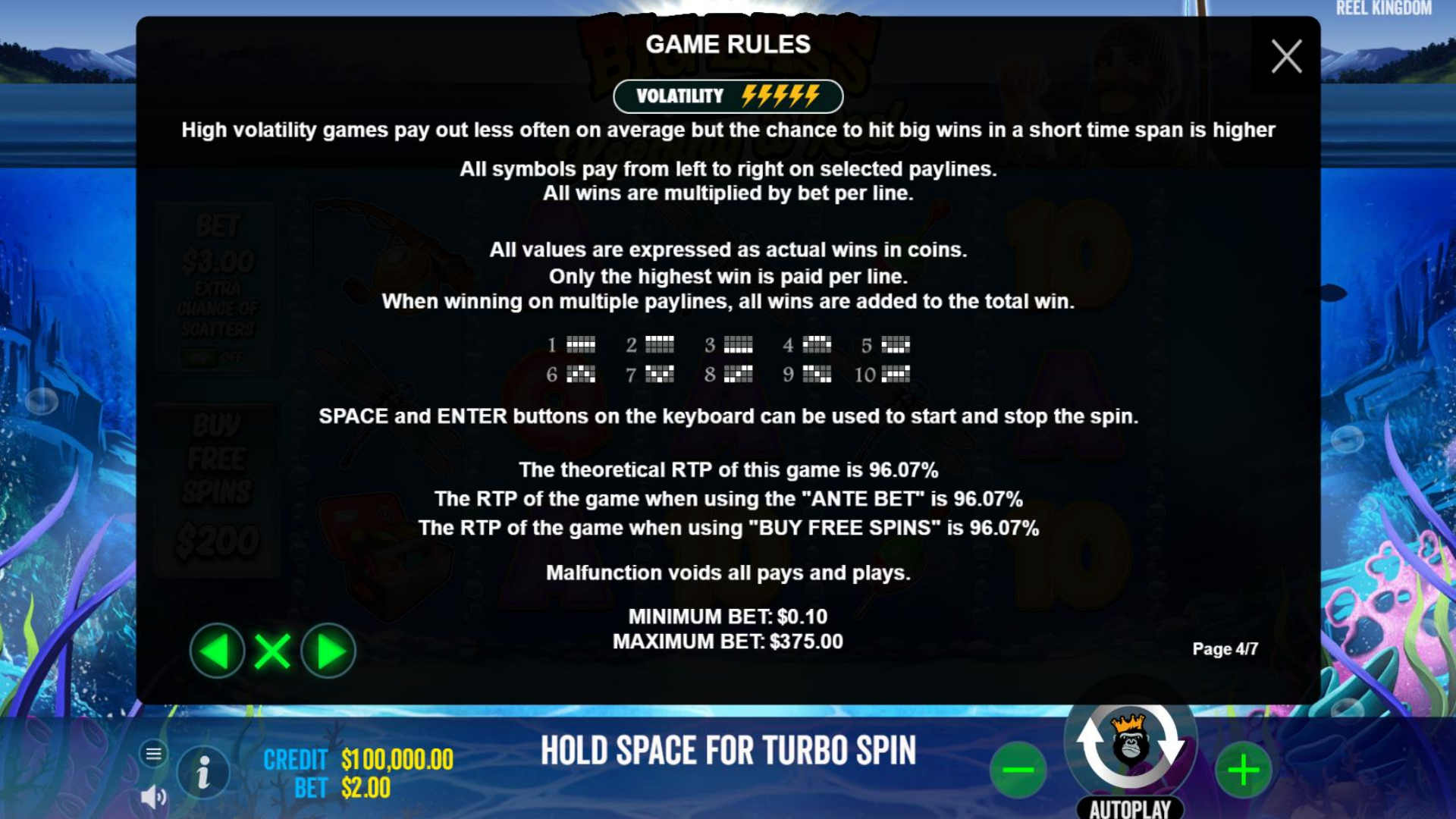
Keeping It Reel illustrates why a label, an icon strip and a printed number should stay in their own formats. Its help describes High volatility and shows five yellow lightning icons. A separate Game Information panel in the supplier Overview prints “Volatility: 10”.
- High wording
- The supplier's qualitative payout description
- Five yellow lightning icons
- The visible icon strip accompanying that description
- Volatility: 10
- A printed value with no stated denominator, statistical unit or conversion formula
The printed 10 does not establish 10/10, 100% or a standard deviation of 10. The icon count also does not tell you the chance of a loss. Those formats can describe the same game without providing a shared numerical scale for other suppliers.
Low, Medium, High and Very High are best read as the publisher's descriptions of its named product or mode. Medium is not a disclosed promise that payments will arrive at regular intervals. Even the word “steadily” in a game's help remains a qualitative description unless a defined frequency accompanies it.
For a list of games, keep the title, edition, mode and origin of the label beside each entry. A list of published labels can help you browse. Calling it a measured ranking requires comparable mathematical values and units for those exact games; the labels alone do not provide that ranking.
What a numerical volatility calculation would need
Variance uses squared distances from the mean. Standard deviation is the square root of variance and expresses spread in the original data units. For a sample of observations, sample variance is:
s² = sum of (each observation - sample mean)² ÷ (N - 1).
Here N is the number of observations. The formula applies to that specified sample; it does not turn a short run of spins into the complete mathematical model of a slot. Standard deviation is commonly used to represent game volatility, but a supplier's printed index still needs its own definition and units before you can interpret it that way.
A chart also needs a defined quantity. An icon strip can show a supplier label, and a bar can compare actual stake costs. A payout histogram needs real outcome frequencies. Without those frequencies, an evenly spaced picture of small prizes and occasional big prizes is only an illustration, not evidence about a named game.
Keep different Big Bass Megaways configurations separate
Big Bass Bonanza Megaways has two distinct help examples worth keeping apart. The native demo help shows Medium with 96.72% theoretical RTP. The provider-branded Overview's help panel shows High with five lightning icons and 96.70%.
- Native demo help, page 4/7
- Medium
Printed theoretical RTP: 96.72%.
- Help panel in the provider-branded Overview
- High, five lightning icons
Printed theoretical RTP: 96.70%.
Keep each help example with its own label and RTP; averaging the two would create a value that neither panel prints. They do not establish that an RTP change caused a volatility change, or that one label applies at every casino. A name alone is insufficient when the help supplied with that edition or configuration differs.
When identifying a game's volatility, use the exact title and edition, then read its own help and mode information together. Keep the label attached to the corresponding return row. A generic Big Bass family description cannot substitute for Keeping It Reel or Big Bass Bonanza Megaways, and a catalogue value cannot settle which configuration is served to you.
A feature average is not a countdown
The legacy Rainbow Riches mobile product sheet separates a hit-frequency field from average spins to individual features. Alongside the 20-line 27.02% field, it lists these averages:
- Road to Riches
- 115
- Wishing Well
- 107
- Pot of Gold
- 1,050
A model average is not a number of spins remaining. It does not promise Road to Riches on spin 115, and a run without the feature cannot be subtracted from the average to produce a due date. The sheet gives no conditional probability that turns a losing run into a prediction.
These figures belong to the legacy mobile product sheet, game id rainbowriches. Rainbow Riches (GDM), base Game ID 71504, is a separate edition. The older 27.02% and feature averages should not be transferred to GDM merely because the main title is similar.
Choose the feature you want to follow
Mechanics give you a more concrete choice than an unsupported volatility league table. Look at what accumulates during a feature, what a multiplier applies to and when that feature ends. Those rules describe the experience even when the exact frequency of each outcome is not disclosed.
Keeping It Reel: fish collection and a growing trail
During free spins, ordinary Wilds and Golden Wilds collect visible Fish Money. A Golden Wild also collects the current landing-net value. Fish that were not collected enter the net, but its value can fall: a random fish with a random value escapes on each free spin.
Every fourth collected Wild retriggers ten spins. Later batches use collection multipliers of 2x, 3x and 10x at levels two, three and four. The new batch starts after the current one finishes, and the feature cannot retrigger further after level four. These stage multipliers apply to collected fish and net money; ordinary line wins remain outside that multiplier calculation.
The collection trail lets you follow the Wild count and stored values through the feature. A retrigger depends on collecting the fourth Wild in that batch; it cannot be assumed before those Wilds arrive. The escape rule provides no fixed percentage for the fish removed from the net.
The Dog House original: wilds stay on the grid
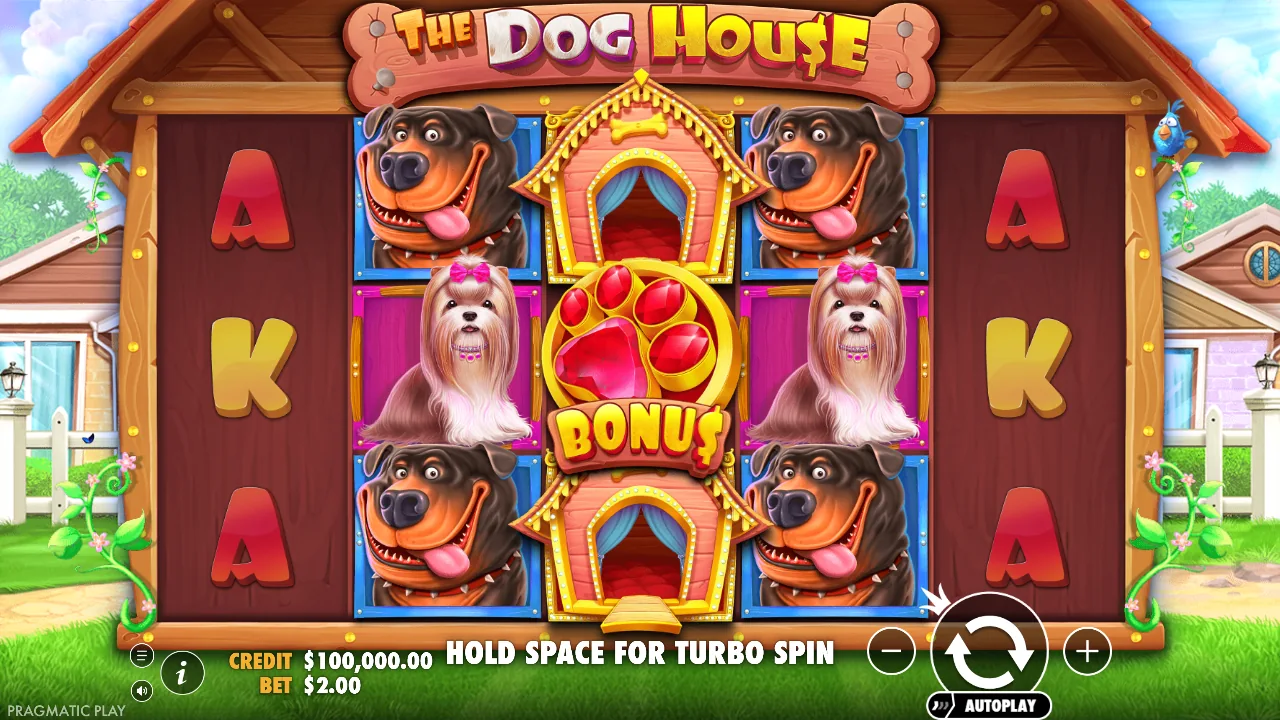
The original The Dog House has 20 fixed paylines. Wilds on reels two, three and four carry 2x or 3x multipliers; multiple wild multipliers on one line add together. During free spins the wilds remain in their positions until the feature ends.
Nine small reels with values one, two and three allocate 9-27 free spins before the feature. It cannot retrigger. The interest here is the changing sticky-wild grid within that allocated feature, rather than a fish-collection trail. The original's additive multipliers and fixed lines must stay separate from Megaways and Multihold rules.
Zeus vs Hades: compare modes within one title
Zeus vs Hades - Gods of War labels Olympus High and Hades Very High in its launch description. Its CV help describes Olympus as entering free spins more often, with a lower average feature win than Hades. Hades has the reverse relative pattern.
Mode switching is described in the base game. This is a meaningful choice between two feature patterns in one title, but the comparison supplies no numerical trigger rate or award ratio and establishes no profit advantage for either mode. Both retain the 15,000x cap.
Set the money exposed per paid round
The amount staked is a separate decision from the volatility label. A smaller monetary stake reduces the money exposed on each paid round. It does not change a High label into Low or supply a forecast of your session's length.
Initial allocation: a count of stakes you can fund
The original Dog House rules used in the arithmetic example have €0.20 and €100 as their total-stake endpoints. With a hypothetical €100 initial allocation:
- €0.20
- €100 ÷ €0.20 = 500
- €100
- €100 ÷ €100 = 1
This comparison uses initial money only, with no prizes played again. It is not an estimate of spins before your balance runs out or a recommendation to use the €100 maximum. Any awards, later stakes and decision to stop would change a real session's sequence.
An optional bet can increase the cost
Keeping It Reel uses a normal bet multiplier of 10 and an Ante multiplier of 15 at the same underlying denomination. Ante therefore costs 1.5 times the normal stake, a 50% increase.
In a hypothetical EUR example, where the denomination is offered, a €0.20 normal stake becomes €0.30 with Ante: €0.20 × 15 ÷ 10. The extra exposure is €0.10 per paid round. These euro amounts illustrate the ratio; they do not identify the currency printed in the supplier's dollar-sign example or establish a EUR stake menu.
The Ante rule describes more Scatters and disables Buy Free Spins. It gives no exact trigger probability or profitable return from the increased cost. Read the total paid stake after selecting the option, rather than treating the original normal stake as the price of the round.
Match the label to the rules you will use
Start with the exact edition and mode. Read its volatility description, its return row and the paytable's stake basis as separate fields. Then decide which mechanic you want to follow and how much money you intend to expose on each paid round, including any optional increased bet.
For that next choice, compare slots by their mechanics. Keeping It Reel's collection ladder, the original Dog House's sticky grid and Zeus vs Hades' relative mode choice each give you something specific to compare.
Questions and answers
Does a 50,000x maximum mean a slot has High volatility?
No. Sweet Bonanza Super Scatter's help pairs Low volatility with a 50,000x bet round cap. Reaching that cap ends the round and forfeits remaining features; the cap does not state its probability or justify changing the label to High.
Can I read Keeping It Reel's 'Volatility: 10' as 10/10?
No. Its supplier Overview prints 'Volatility: 10' without a stated denominator, statistical unit or conversion formula. The help separately uses High and five yellow lightning icons. The 10 does not establish 10/10, 100% or a standard deviation of 10, and the icon count does not state a loss probability.
Why does Big Bass Bonanza Megaways have both Medium and High labels?
Big Bass Bonanza Megaways has separate help examples: the native demo help pairs Medium with 96.72% theoretical RTP, while the provider-branded Overview's help pairs High and five lightning icons with 96.70%. Keep each label with its own return row. These examples do not establish that the RTP difference caused the label difference or that either label applies at every casino.